



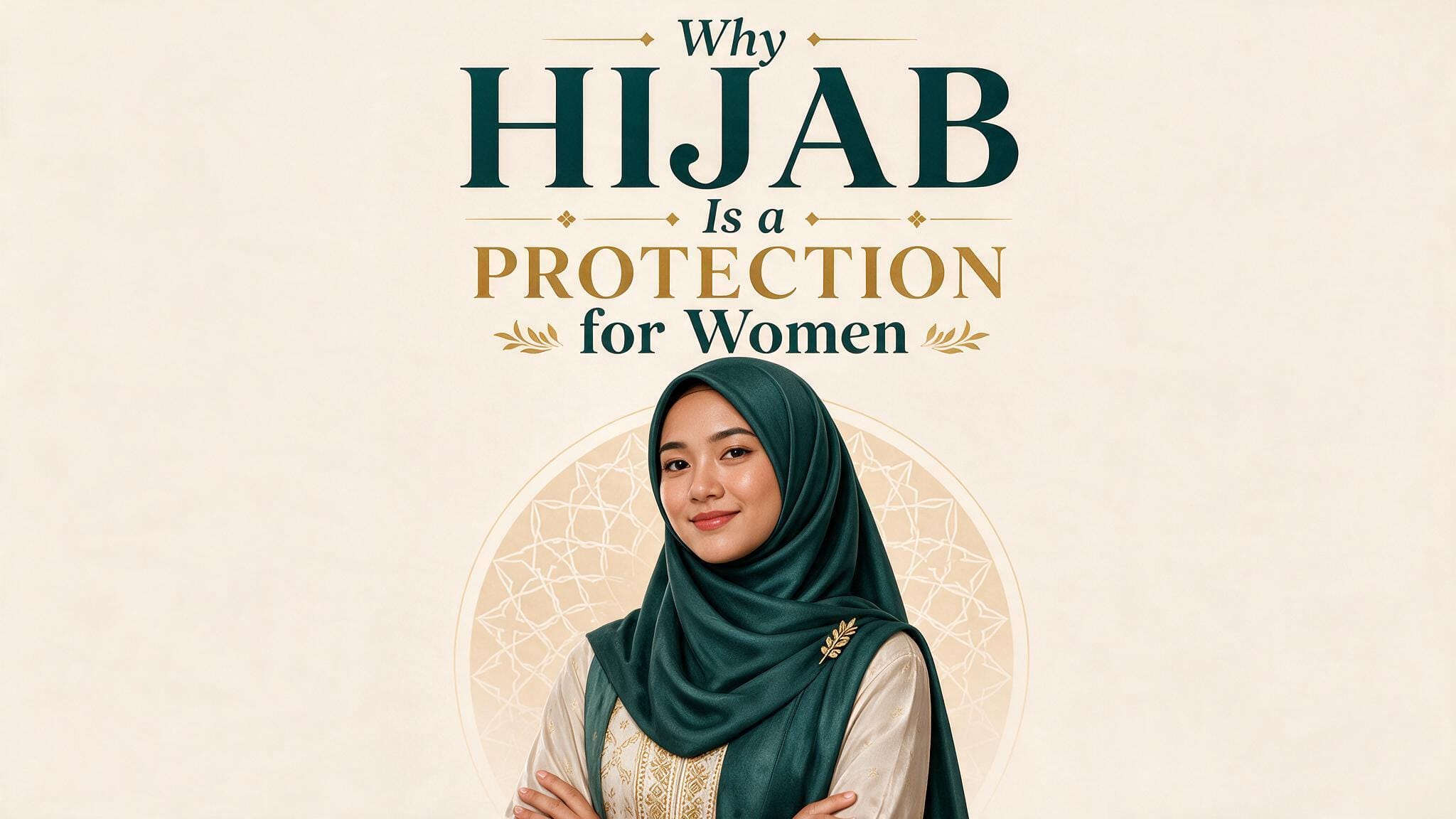
Why Hijab Is a Protection for Women
The hijab is one of the most recognized symbols of Islam. While it is often discussed in terms of clothing, its true purpose goes much deeper. For millions of Muslim women around the world, the hijab represents faith, modesty, dignity, and devotion to Allah.
Many people ask, “Why do Muslim women wear the hijab?” or “How does the hijab protect women?” Understanding the Islamic perspective helps answer these questions with greater clarity.
In this article, we explore why the hijab is regarded as a form of protection, what Islam teaches about modesty, and why many women choose to wear it as an expression of their faith.
What Is the Hijab?
The word hijab generally refers to the head covering worn by many Muslim women. More broadly, it also represents the Islamic concept of modesty in dress, behavior, speech, and character.
Islam teaches that modesty is a virtue for both men and women. The Qur’an instructs believing men to lower their gaze and guard their modesty before giving similar guidance to believing women. This highlights that respect and moral responsibility are shared by everyone.
1. Hijab Provides Spiritual Protection
One of the most important reasons Muslim women wear the hijab is to strengthen their relationship with Allah.
The hijab serves as a daily reminder of faith and obedience to God’s guidance. It encourages self-discipline and mindfulness in everyday life, inspiring women to act with honesty, kindness, and integrity.
Rather than being merely a dress code, the hijab becomes an act of worship and devotion.
2. Hijab Protects Personal Dignity
The hijab encourages people to value a woman for her character, knowledge, and personality rather than focusing solely on her physical appearance.
Many women say wearing the hijab gives them confidence because it allows them to define themselves through their beliefs, values, and abilities.
While appearance is a natural part of life, Islam teaches that true worth comes from righteousness and good character.
3. Hijab Supports Emotional Confidence
For many Muslim women, the hijab provides a sense of identity and belonging.
It allows them to express their faith openly and confidently while remaining true to their personal values. Wearing the hijab can create a feeling of consistency between one’s beliefs and daily life.
Every woman’s experience is unique, but many describe the hijab as a source of inner peace and confidence.
4. Hijab Encourages Respectful Interactions
The hijab is part of Islam’s broader teaching on modesty, which encourages respectful behavior between men and women.
However, it is important to understand that respectful conduct is everyone’s responsibility. Islam teaches men to lower their gaze and behave with dignity, just as it encourages women to dress modestly.
The hijab should never be interpreted as placing responsibility for another person’s actions on women.
5. Hijab Is a Personal Act of Faith
Many women choose to wear the hijab because they see it as an act of worship and obedience to Allah.
Their decision may also reflect personal conviction, cultural identity, or family tradition. Whatever the reason, the choice deserves understanding and respect.
Likewise, respect should also be extended to women who make different personal choices.
Common Misconceptions About the Hijab
Myth: Hijab Prevents Women from Succeeding
Many Muslim women who wear the hijab are doctors, engineers, teachers, entrepreneurs, scientists, athletes, and leaders.
Their achievements demonstrate that wearing the hijab does not limit education, career opportunities, or personal growth.
Myth: Hijab Is Only About Clothing
The hijab is not simply a headscarf. In Islam, modesty includes honesty, humility, respectful speech, compassion, and good character.
The physical hijab is one expression of a much broader spiritual principle.
Frequently Asked Questions
Why do Muslim women wear the hijab?
Many Muslim women wear the hijab as an act of faith, modesty, and obedience to Allah. It also reflects their religious identity and personal values.
Does the hijab protect women?
From an Islamic perspective, the hijab is understood as a form of spiritual, emotional, and personal protection. It symbolizes modesty and devotion, while encouraging others to focus on a woman’s character rather than her appearance. At the same time, respect and safety are responsibilities shared by everyone in society.
Is wearing the hijab compulsory in Islam?
Different Islamic scholars and schools of thought discuss this topic in detail. Many Muslims believe that wearing the hijab is a religious obligation based on their understanding of the Qur’an and authentic teachings of the Prophet Muhammad ﷺ.
Conclusion
The hijab is much more than a piece of fabric. For millions of Muslim women, it is a meaningful expression of faith, modesty, dignity, and identity.
While the hijab is often described as a form of protection, its greatest purpose is to help believers strengthen their relationship with Allah and embody the values of modesty and good character. Islam also teaches that building a respectful society requires both men and women to uphold these values.
Understanding the true purpose of the hijab encourages greater respect, meaningful dialogue, and appreciation for the diverse experiences of Muslim women around the world.

